Protect sources
An iterative median and MAD mask excludes galaxies, stars, spikes and other bright signal.
Model and subtract weak, arbitrarily oriented detector row-bias fields from linear monochrome Hubble mosaics without rotating or resampling the science image.
Hubble ACS/WFC row-bias variations are horizontal in detector coordinates. Drizzle can reproject those detector rows to arbitrary angles in a final mosaic. Their amplitude may sit below the pixel noise, but their coherence across thousands of pixels makes them visible after a strong display stretch.
StripeField estimates a signed additive value at every pixel. It is not a defective-row selector and it never rotates the input image.
The correction is exactly corrected = input - stripe field. The full-precision
signed field opens in a separate PixInsight window. Apply an STF and verify that it contains
line structure only before keeping the correction.
If the model contains a galaxy, halo, tidal feature, star or diffraction pattern, reject the result and use more conservative settings.
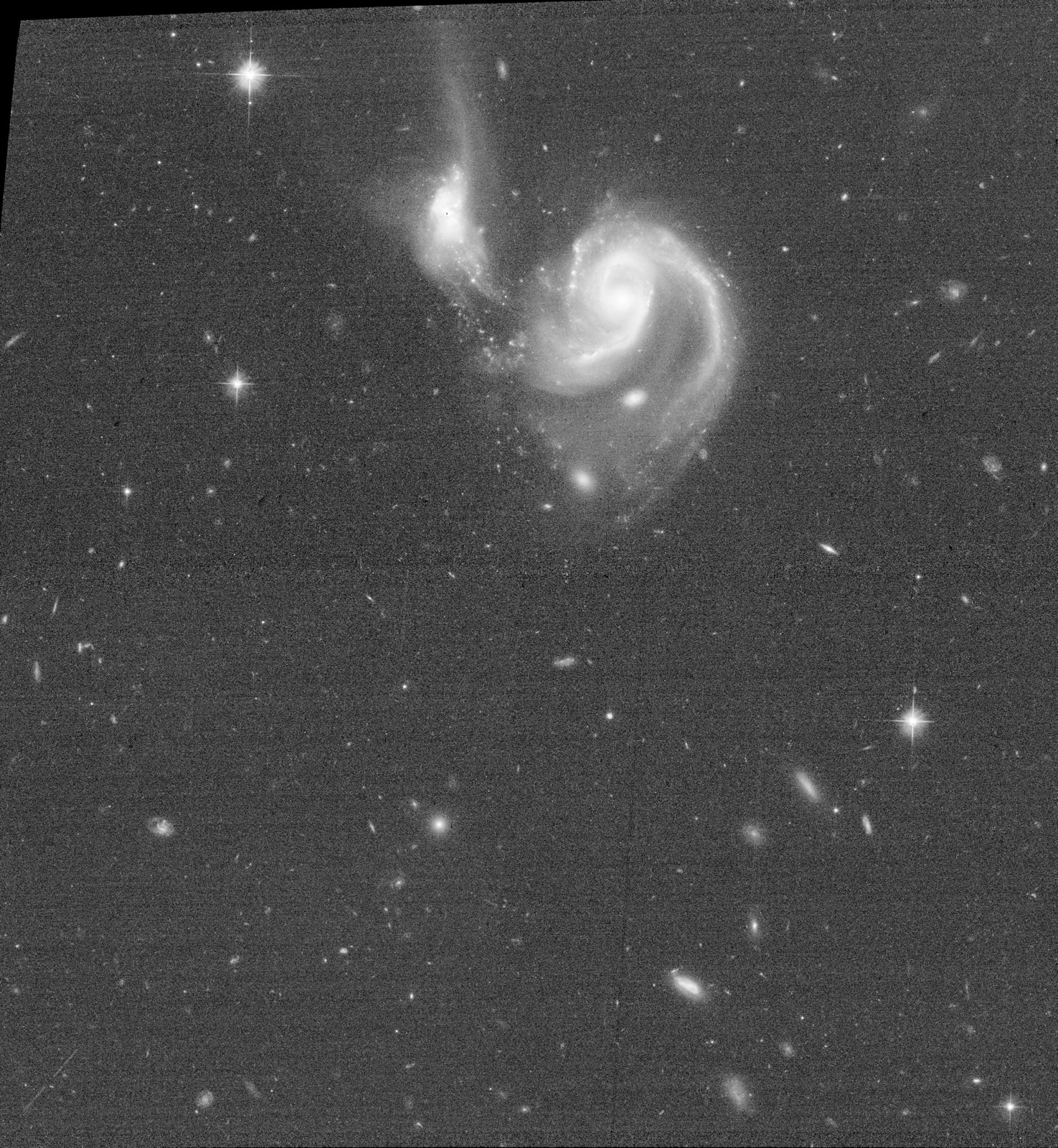
Drag anywhere across the image to compare the same strongly stretched display before and after correction. The processing itself was performed on the linear mosaic.
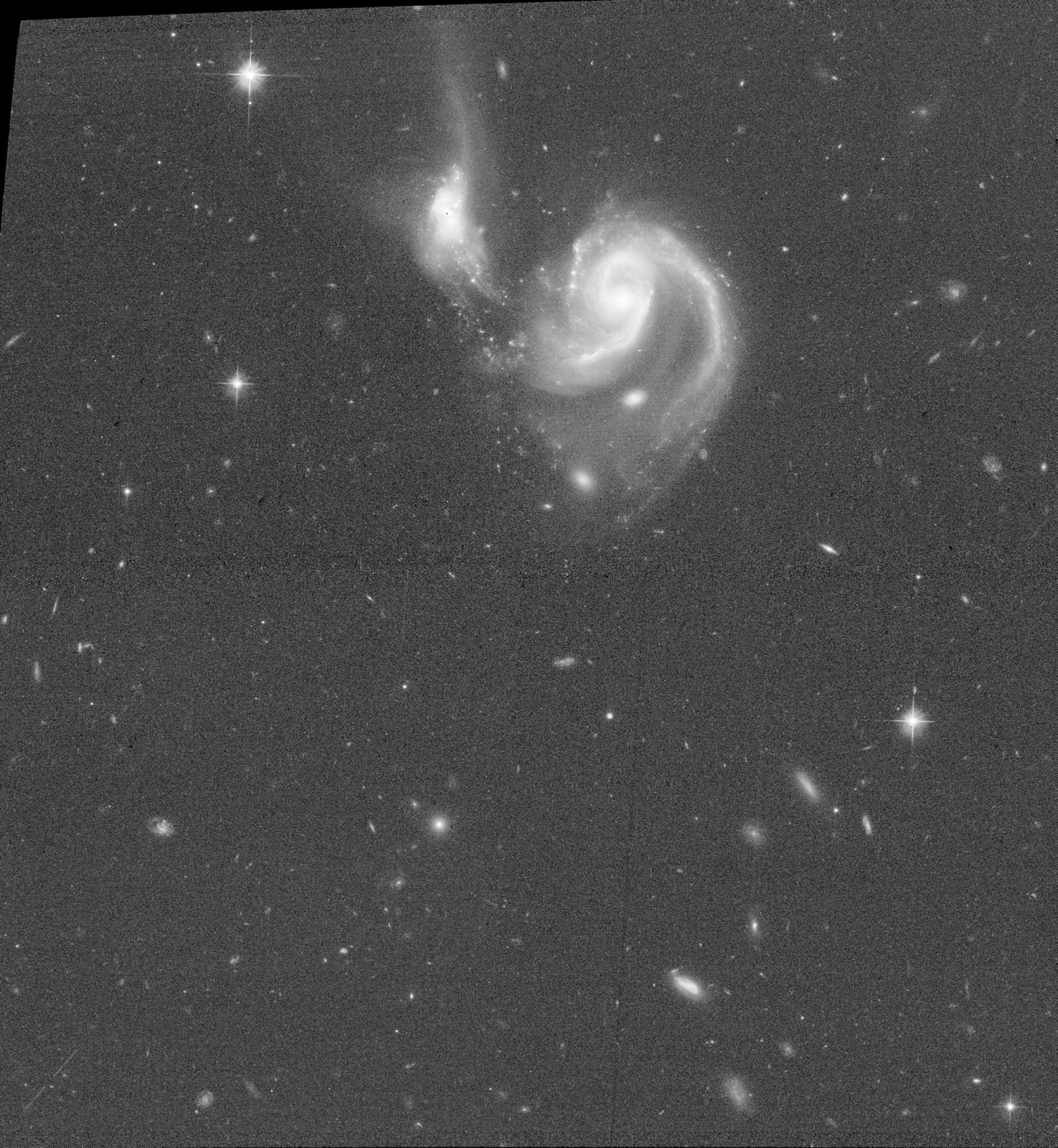
 Input
Corrected
Input
Corrected
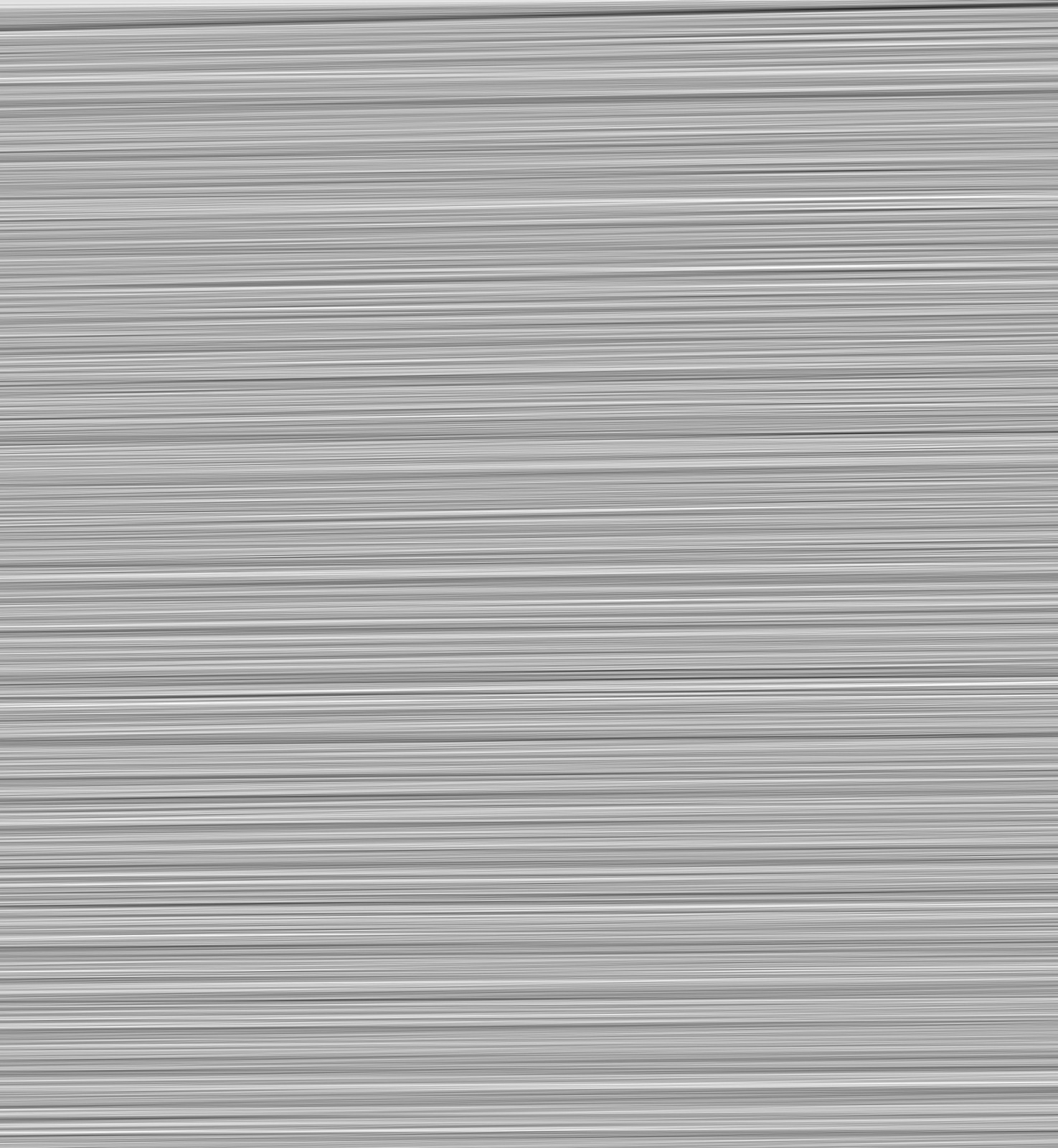
This is the model removed from the Arp 255 mosaic, displayed with its own strong stretch. It contains the coherent line structure and no visible imprint of the galaxy or stars.
The model window is enabled by default because this visual check is part of the method, not an optional presentation feature.
An iterative median and MAD mask excludes galaxies, stars, spikes and other bright signal.
A noise-corrected scan tests angles from -90 to +90 degrees and refines the best candidate to 0.125 degrees.
Robust transverse medians isolate row-scale structure while broad astronomical background is removed from the estimate.
Wiener shrinkage suppresses unmeasured components, then the accepted field is evaluated on the original pixel grid.
A concentration guard catches isolated satellite trails or diffraction spikes that could mimic a stripe direction. Those pixels are masked instead of being extended into a full-frame subtraction.
| Parameter | Default |
|---|---|
| Maximum passes | 12 |
| Stopping significance | 5 sigma |
| Background smoothing | 100 px |
| Source mask threshold | 3 MAD |
| Transverse detrending | 25 px |
| Along-stripe component | Disabled |
| Hubble mosaic | Families | Runtime |
|---|---|---|
| Arp 255 | 5 | 282 s |
| Arp 314 | 8 | 411 s |
| Arp 141 | 11 | 522 s |
The synthetic regression preserves
input = corrected + model to 1.86e-9 maximum error and reduces the
row-profile high-frequency RMS by 73 percent.
Do not run StripeField on a strongly stretched image. Stretching changes the noise statistics used by the mask, angle score and Wiener weights.
JWST is not validated. Its final mosaics can combine zone-dependent stripe families, detector footprints and exposure seams. The current global Hubble field should not be treated as a JWST correction.